


 русский
 عربى
عربى
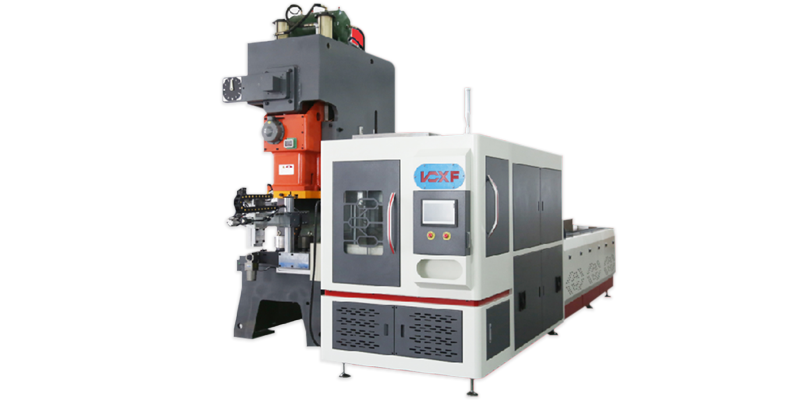
80T/125T Fully Automatic Hot Forging All-In-One Machine
This equipment has an exquisite appearance and is highly integrated: it integrates feeding, heating,...
View MorePrecision in forging operations goes far beyond force and temperature. Even minor deviations in alignment can significantly influence the final quality of forged components. In modern production environments, Fully Automatic Forging Machines and integrated Hot Metal Forging Equipment are expected to deliver repeatable accuracy across thousands of cycles. However, alignment errors remain one of the less visible yet highly impactful challenges in forging systems.
Manufacturers such as Taizhou Huanlian Technology Co., Ltd. have observed that many quality issues initially attributed to material defects or temperature fluctuations are actually rooted in misalignment within the forging system.
Misalignment: A Hidden Source of Defects
Alignment in forging refers to the precise positioning between upper and lower dies, as well as the correct orientation of the billet during deformation. Even a small offset — sometimes less than 0.5 mm — can contribute to uneven material flow.
Typical consequences include:
Dimensional inaccuracies in forged parts
Surface laps or folds caused by improper metal flow
Internal stress concentration, reducing fatigue life
Hot forging already involves thermal gradients and material softening above recrystallization temperature . Adding mechanical misalignment into this process further complicates deformation behavior.
Types of Alignment Errors in Forging Systems
Alignment issues can originate from several sources across the production line:
1. Die Misalignment
Improper installation or wear of die holders can result in uneven contact surfaces.
Unequal pressure distribution
Accelerated die wear
Flash formation on one side
2. Ram and Slide Deviation
In forging presses, the vertical motion of the ram must remain strictly parallel.
Guide rail wear may introduce angular deviation
Clearance variation increases over time
3. Billet Positioning Errors
Automation systems feed heated billets into the die area. Misplacement can occur due to:
Robot gripping inaccuracies
Conveyor misalignment
Inconsistent billet geometry
4. Thermal Expansion Effects
High temperatures — often 1000–1200°C for steel forging — cause components to expand unevenly.
Frame distortion
Die shift during long production cycles
Impact on Product Quality
Alignment errors directly affect how metal flows within the die cavity. Since hot forging relies on controlled plastic deformation above recrystallization temperature , any imbalance alters grain structure and mechanical performance.
Key quality risks include:
Incomplete filling of die cavities
Grain flow discontinuity, weakening structural integrity
Excess machining allowance, increasing downstream cost
Over time, repeated misalignment can also damage equipment, creating a cycle of declining accuracy.
Detection and Monitoring Methods
Modern forging facilities rely on multiple techniques to identify alignment issues early:
Laser alignment systems to verify die positioning
Force sensors to detect uneven load distribution
Vision systems to monitor billet placement
Data collected from these systems can be integrated into the control logic of Fully Automatic Forging Machines, allowing real-time correction or automatic shutdown in severe cases.
Engineering Solutions for Improved Alignment
Addressing alignment challenges requires both mechanical design improvements and process control strategies:
Structural Enhancements
High-rigidity frames reduce deformation under load
Precision guide systems maintain ram stability
Automation Optimization
Servo-controlled manipulators improve billet positioning accuracy
Adaptive gripping systems compensate for shape variation
Thermal Compensation
Preheating dies (typically 150–300°C) helps reduce thermal shock and distortion
Real-time compensation algorithms adjust for expansion
Taizhou Huanlian Technology Co., Ltd. integrates alignment calibration routines into its equipment setup process, helping operators maintain consistency over extended production runs.
Maintenance and Calibration Practices
Consistent alignment cannot be achieved without routine inspection:
Scheduled die alignment checks
Lubrication of guide rails and moving parts
Replacement of worn bushings and bearings
Even high-precision Hot Metal Forging Equipment requires recalibration after a certain number of cycles, especially in high-volume production environments.
This equipment has an exquisite appearance and is highly integrated: it integrates feeding, heating,...
View More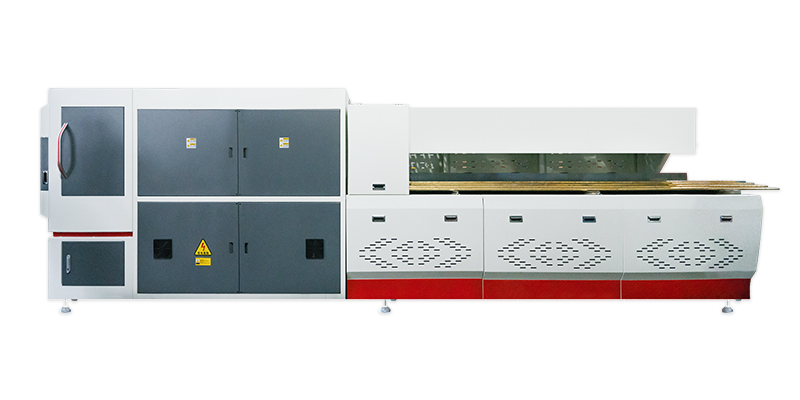
This equipment has an exquisite appearance and is highly integrated: it integrates feeding, heating,...
View MoreCopyright © Taizhou Huanlian Technology Co., Ltd. Rights Reserved.
Sale Hot Forging Machine Factory

