


 русский
 عربى
عربى
80T/125T Fully Automatic Hot Forging All-In-One Machine
This equipment has an exquisite appearance and is highly integrated: it integrates feeding, heating,...
View MoreDefect control in hot forging is not only about better tooling—it requires consistent process parameters, precise coordination, and timely monitoring. Many manufacturers are now shifting toward automated systems such as a Hot Forging Automation Production Line combined with a high-precision Hot Forging Machine Tool to enhance the stability and repeatability of production. With automation taking over critical steps like heating, transferring, forming, and trimming, companies are able to achieve more reliable forging quality under continuous mass-production conditions.
1. Key Sources of Defects in Conventional Hot Forging
Even experienced workshops face recurring problems during manual or semi-automatic forging. Common issues include:
Underfill or incomplete forming caused by insufficient material volume or uneven billet temperature.
Surface laps and folds when metal flow is restricted or dies are misaligned.
Cracks during forming resulting from low temperature, wrong deformation ratio, or fatigue in the die cavity.
Scale inclusions when excessive oxide enters the mold during forming.
Dimensional deviation due to inconsistent manual handling or timing differences in heating.
More of these issues stem from unstable human operations, uncontrolled heating variation, or slow reaction time when something goes wrong. Automated machine tools are designed to reduce these variables.
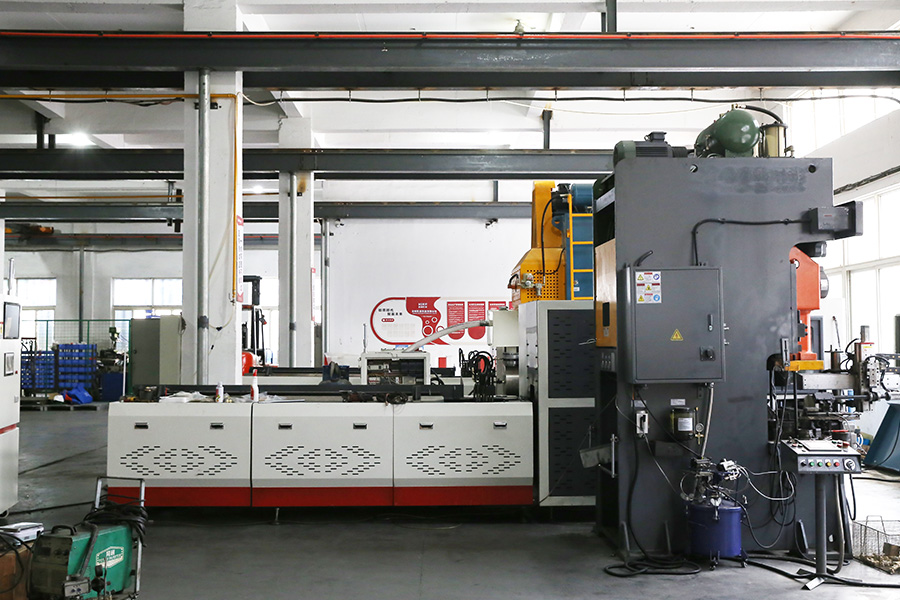
2. How an Advanced Hot Forging Machine Tool Helps Reduce Defects
A well-designed forging machine introduces several improvements:
● Stable and Uniform Forming Force
Automation maintains consistent stroke speed and repeatable forming pressure. This ensures the metal flows evenly inside the cavity and reduces risks of underfill, overlaps, and dimension errors.
● Real-Time Temperature Monitoring
By incorporating temperature sensors, the system can avoid forging at excessively low or high temperatures. Forging in the correct temperature window prevents cracks and material brittleness.
● High Die Alignment Accuracy
Automation ensures precise die positioning with less deviation compared to manual adjustments. Accurate alignment improves the quality of each part over long production runs.
● Automated Timing Control
Every step—from heating to forming—follows preset parameters. This prevents overheating, over-pressing, or inconsistent dwell time.
● Predictive Maintenance Functions
Modern equipment monitors load, vibration, temperature, and die stress. Early detection lowers unplanned downtime and die-related defects.
These improvements collectively increase stability in the forging process and significantly lower scrap rates.
3. Advantages of a Hot Forging Automation Production Line
When the machine tool is integrated into a complete automated line, the system gains even more benefits:
● Automatic Feeding and Billet Positioning
The line ensures every billet enters the die at the correct angle and position, removing human inconsistency.
● Consistent Heating Control
Induction heaters work with sensors for accurate temperature management across all billets.
● Intelligent Robot Transfer
Automated transfer removes delays between processes, helping maintain temperature uniformity.
● Reduced Labor Intensity and Higher Safety
Automation replaces hazardous manual handling, lowering injury risk and operator fatigue.
● Continuous Operation for Higher Throughput
A fully automated line supports long cycles with minimal interruptions, improving production efficiency.
For companies seeking high-volume, stable output, these features can be critical advantages.
4. Why Manufacturers Prefer Smart Forging Equipment
Companies increasingly adopt automated forging solutions not only for quality improvement but also for long-term cost efficiency. Stable defect rates reduce material waste. Predictable production cycles simplify scheduling. Automated logs and data collection help maintain consistent quality standards.
As a supplier of forging automation solutions, Taizhou Huanlian Technology Co., Ltd. places emphasis on developing systems that support these operational needs. Their integrated control mechanisms and customized industrial solutions are designed to help users optimize their forging workflow and achieve reliable output in demanding applications.
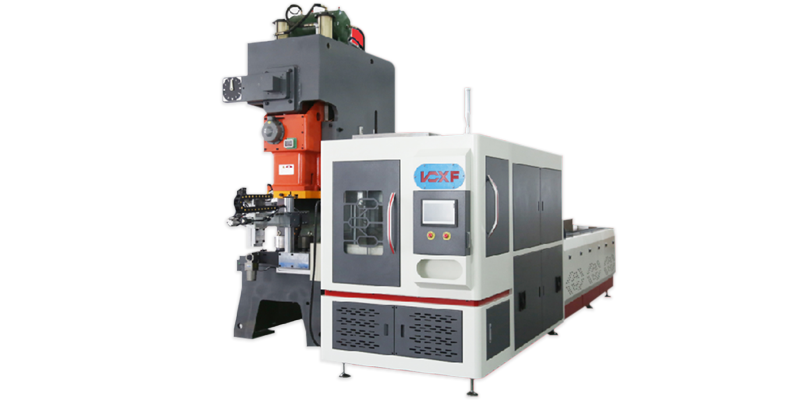
This equipment has an exquisite appearance and is highly integrated: it integrates feeding, heating,...
View More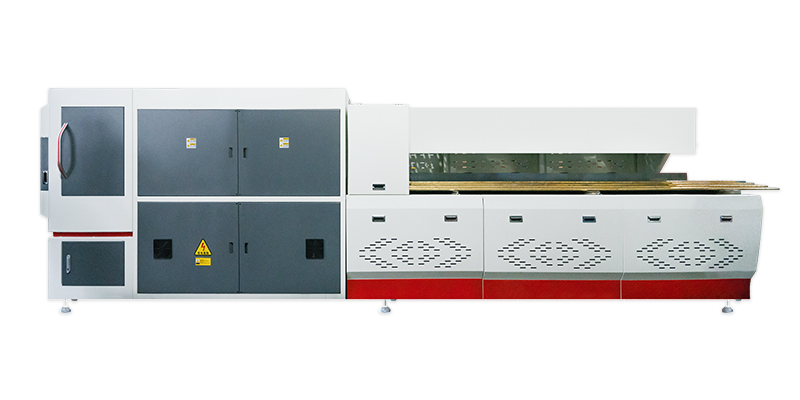
This equipment has an exquisite appearance and is highly integrated: it integrates feeding, heating,...
View MoreCopyright © Taizhou Huanlian Technology Co., Ltd. Rights Reserved.
Sale Hot Forging Machine Factory

