


 русский
 عربى
عربى
80T/125T Fully Automatic Hot Forging All-In-One Machine
This equipment has an exquisite appearance and is highly integrated: it integrates feeding, heating,...
View MoreHot forging production lines increasingly rely on advanced equipment like a high-performance Hot Forging Machine and quality Hot Forging Machine Tool sets to achieve consistent part integrity and efficient manufacturing. However, many users have raised questions about defect challenges in hot forging operations and whether modern machines can truly address them. At Taizhou Huanlian Technology Co., Ltd., we specialize in hot forging equipment design and fabrication, and through customer feedback and field data we’ve identified key areas where defect prevention begins and how ideal machine usage can reduce product issues significantly.
Hot forging inherently involves high heat and substantial metal deformation, making defect risks a constant concern. Common defects such as cracks, unfilled sections, scale pits, and dimensional variances still occur even in automated production, and understanding their root causes is the initial step toward prevention. For example, insufficient material volume or improper heating can cause to unfilled sections where the die cavity is not filled, resulting in incomplete parts. This type of issue often stems from poor process control rather than the machine itself.
Cracks—either on the surface or inside the forged part—remain among the more serious defects. They tend to develop when workpieces are forged below ideal temperatures or cooled too rapidly, both of which compromise material ductility and strength. Cracks also arise from excessive internal stress during deformation, which can happen when machines are operated without adequate process planning.
So how can manufacturers use Hot Forging Machines and the right Hot Forging Machine Tools to reduce these challenges? Initially, precision in temperature control is essential. Machines equipped with accurate thermal management systems help maintain the correct forging temperatures, which ensures the metal maintains sufficient plasticity and reduces defect formation. When temperature fluctuations are minimized, grain structure becomes more uniform and dramatic internal stresses are less likely to form.
Die alignment and tooling quality also play a major role. Die shift, where the top and bottom halves of the die do not align properly, results in dimensional inaccuracy or mismatches in the forged part. Regular inspection of the dies and ensuring that machine settings are optimized for each workpiece geometry can drastically cut down this problem. Many modern Hot Forging Machines integrate alignment checks and feedback systems to automate these adjustments.
Even the more capable Hot Forging Machine Tool will fail prematurely without the right maintenance culture. Wear and tear on dies and tooling surfaces inevitably occur as metals are pressed at high temperature and pressure, but proactive maintenance—such as timely lubrication, surface condition checks, and replacement scheduling—can extend tool life and reduce unexpected defects caused by worn tooling. Regular machine calibration ensures that motion sequences and force application remain consistent throughout production cycles, which further protects part quality.
Material quality is another critical factor. Users often overlook the condition of raw billets or ingots before forging, yet impurities and internal voids exacerbate defect risks during hot forging. Choosing high-quality raw stock helps prevent issues such as internal cracks or voids, while ensuring that lubrication and scale removal practices are in place reduces the incidence of surface blemishes that later show up as pits or imperfections.
Reducing defects in hot forging isn’t solely about having a sophisticated Hot Forging Machine—it's about integrating robust tools, precise process control, and sound operational practices. At Taizhou Huanlian Technology Co., Ltd., we emphasize a holistic approach that combines reliable equipment with proper training and maintenance to help customers achieve higher quality outputs. By understanding why defects occur and how machines can be leveraged to mitigate them, manufacturers can foster stable production, reduce waste, and improve final product reliability across a wide range of applications.
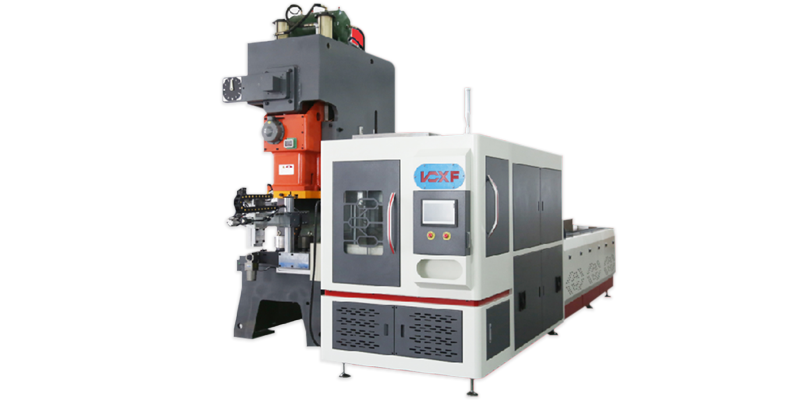
This equipment has an exquisite appearance and is highly integrated: it integrates feeding, heating,...
View More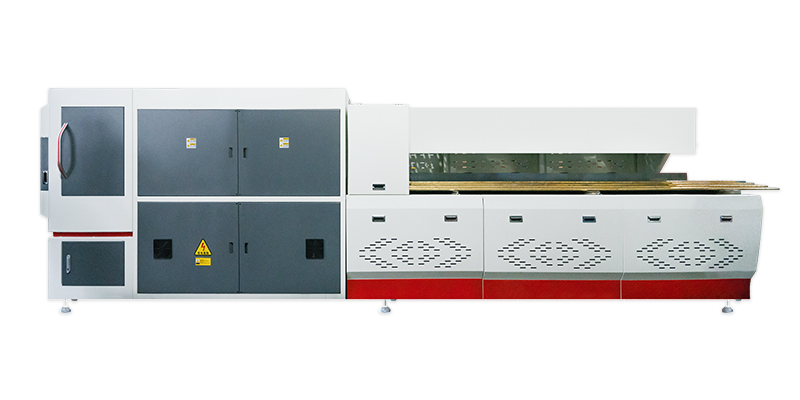
This equipment has an exquisite appearance and is highly integrated: it integrates feeding, heating,...
View MoreCopyright © Taizhou Huanlian Technology Co., Ltd. Rights Reserved.
Sale Hot Forging Machine Factory

